The Home Front
In Henrike Naumann’s work The Home Front – Die Innere Front, the central space in the German Pavilion becomes a site where she explores the past, present and future of societal militarisation.
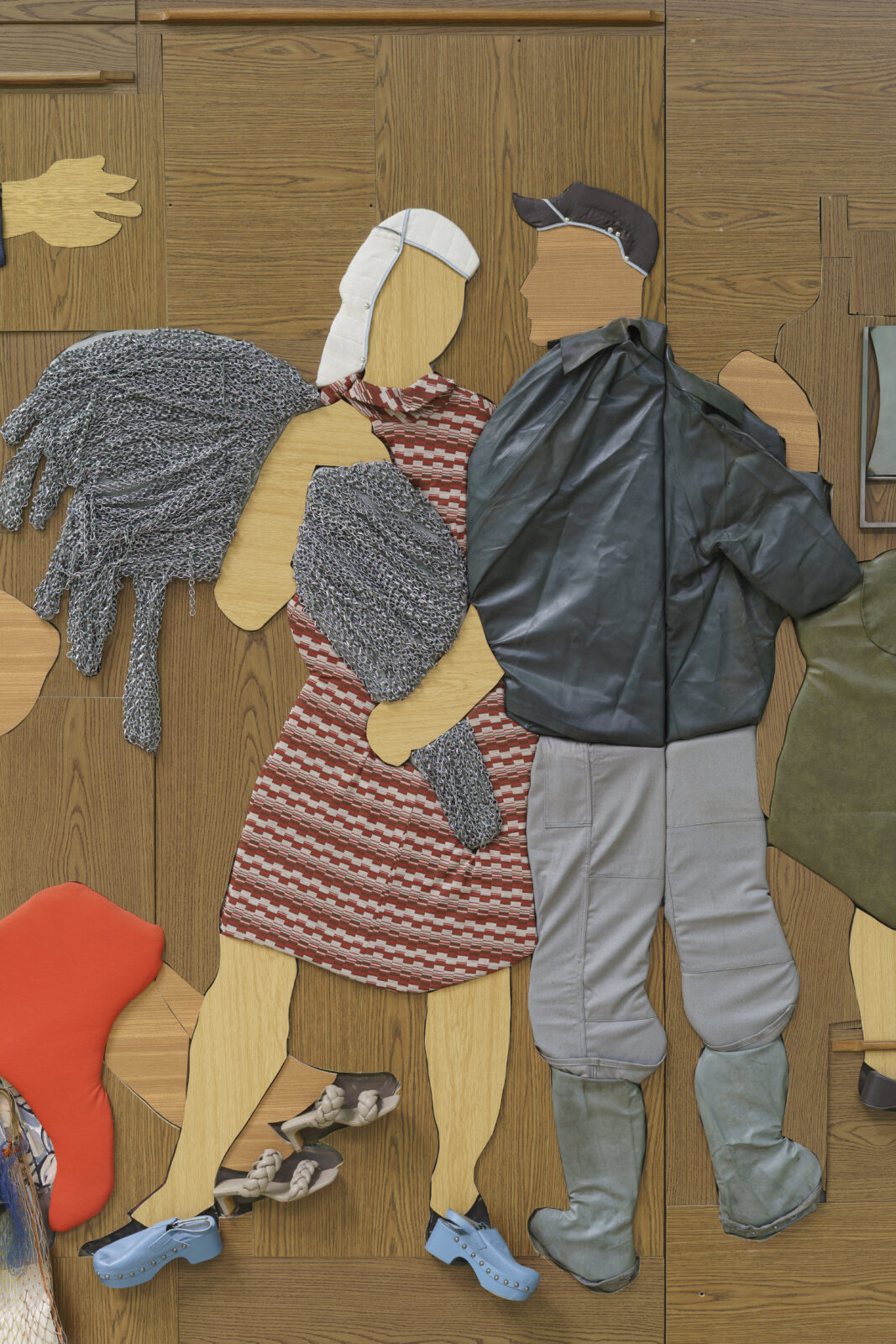
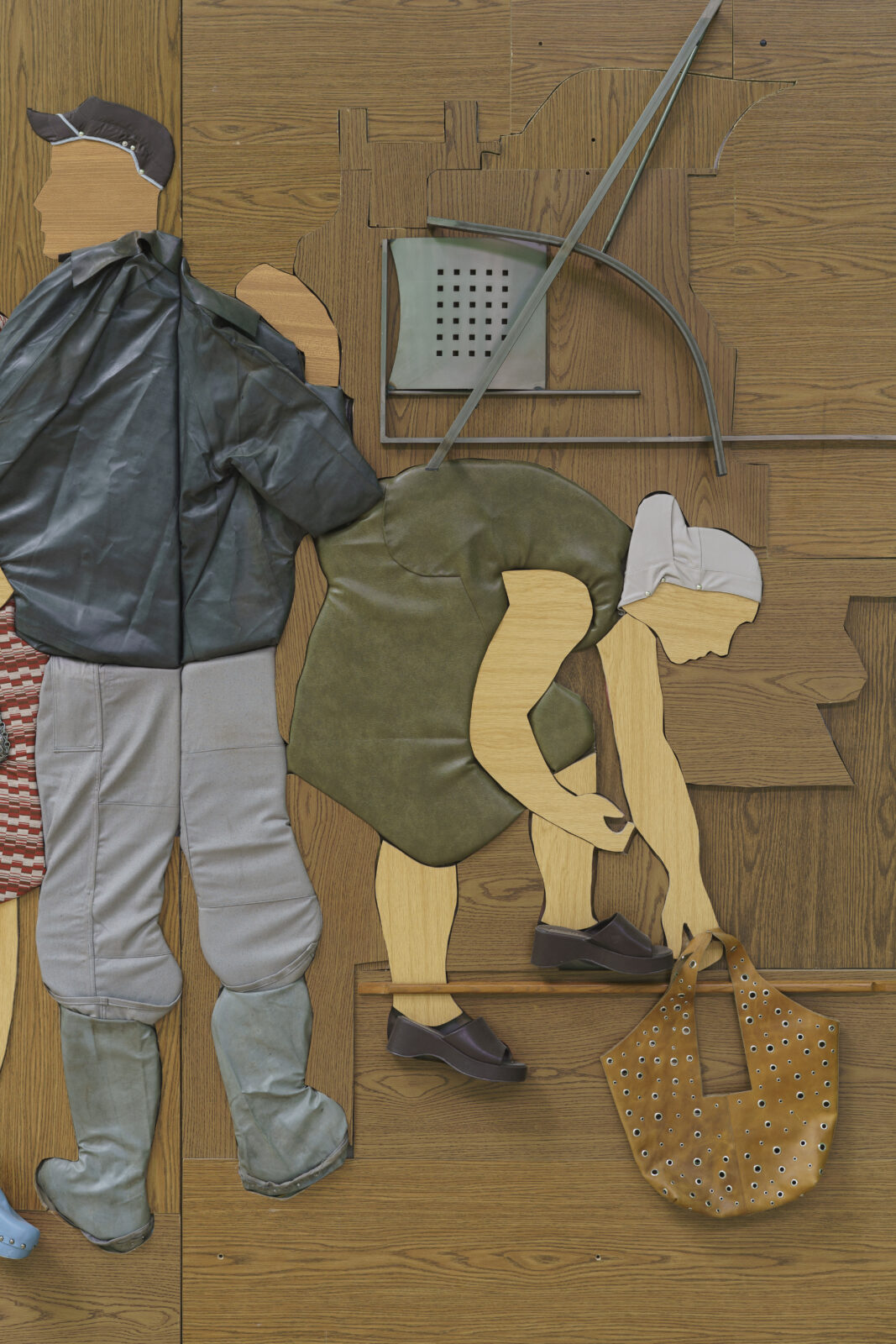
She divides the space into sections labelled War, Post-War, 1990 and Pre-War, through which visitors move in a linear progression. Her formerly three-dimensional spatial installations have been flattened into wall reliefs in Venice, whilst at the same time becoming more condensed. Formerly documentary-narrative interiors have been transformed into abstract systems of signs. They refer to the tradition of art in architecture (Kunst am Bau) in the GDR and the possibilities of abstract representation within the strict guidelines of Socialist Realism.
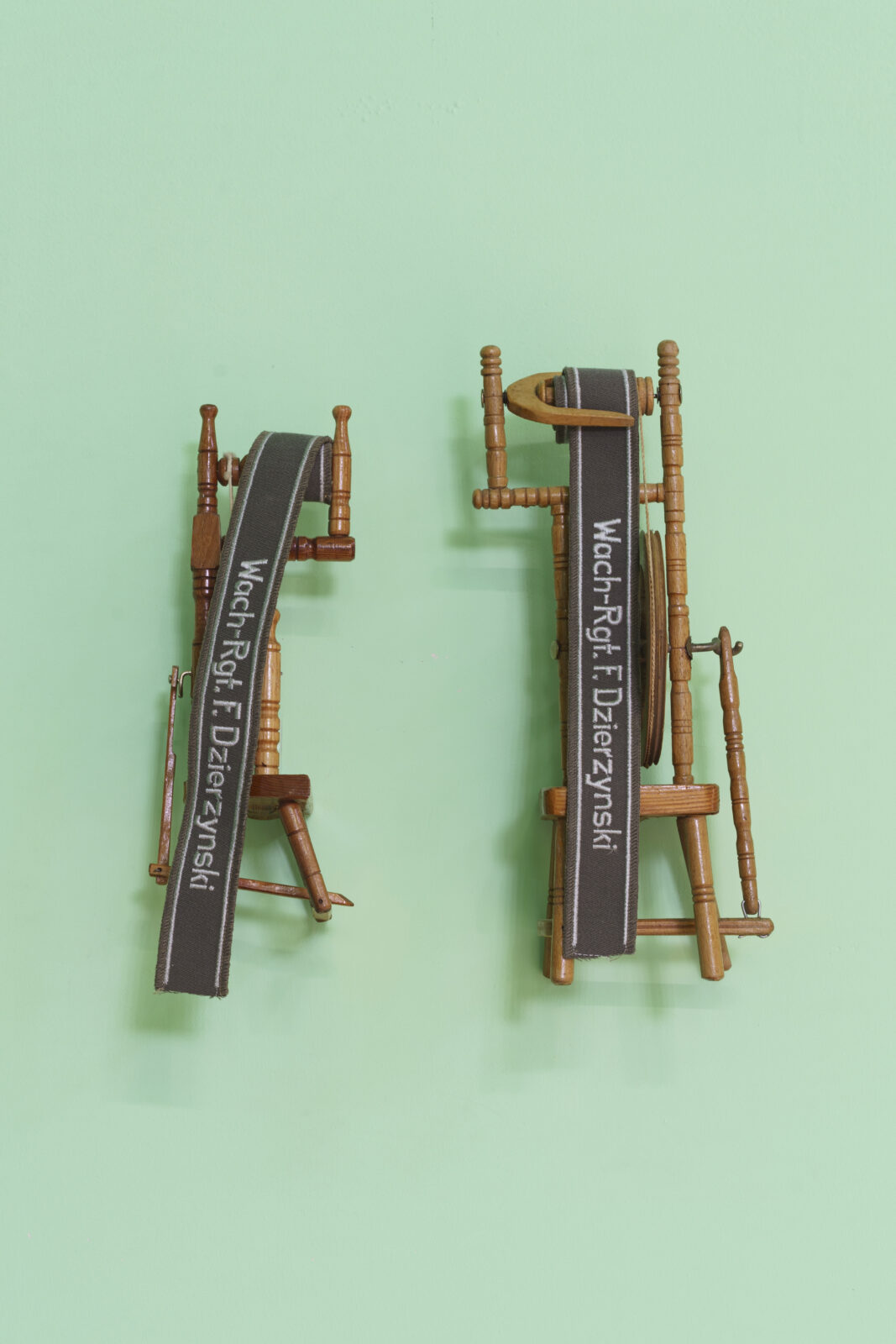
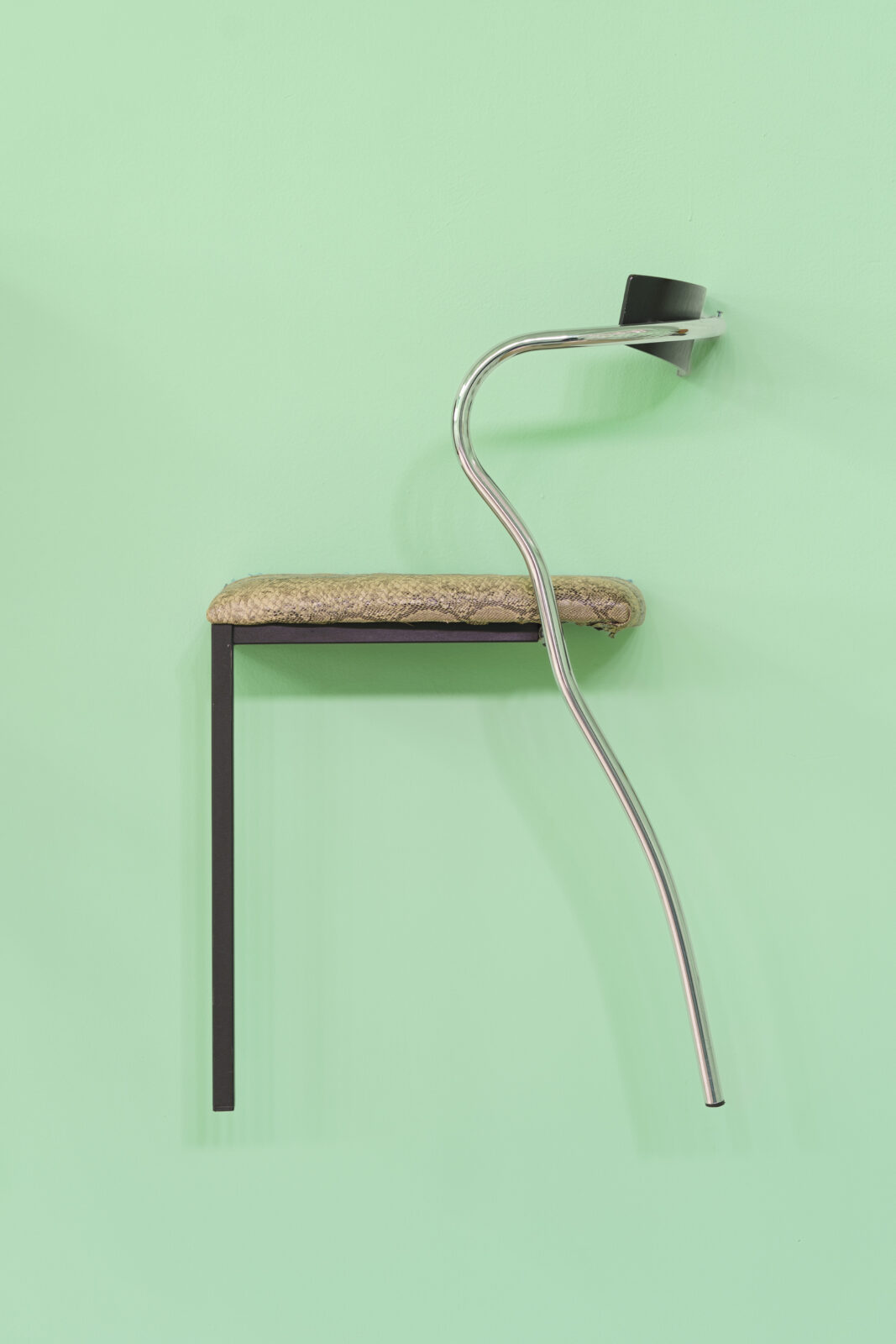
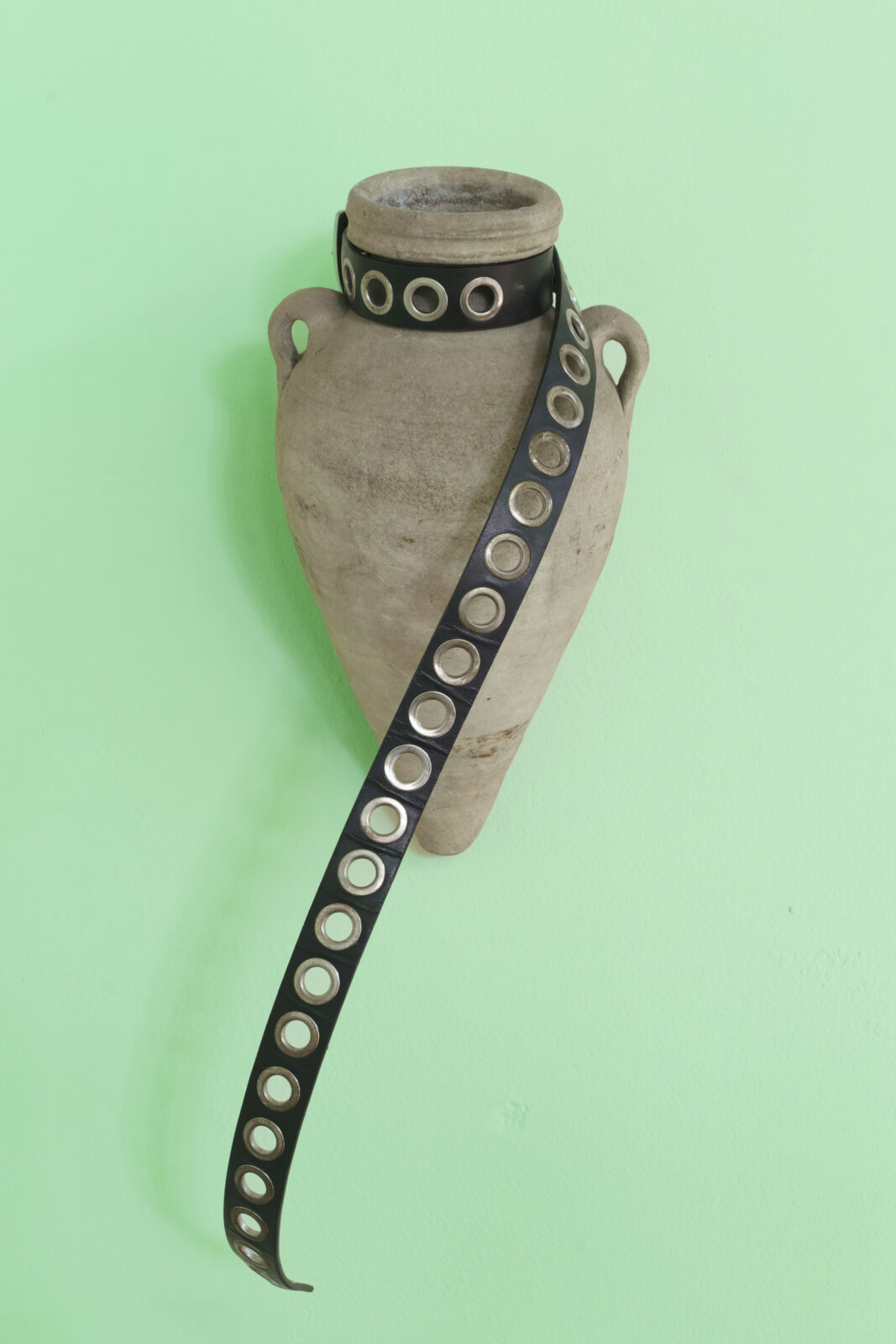
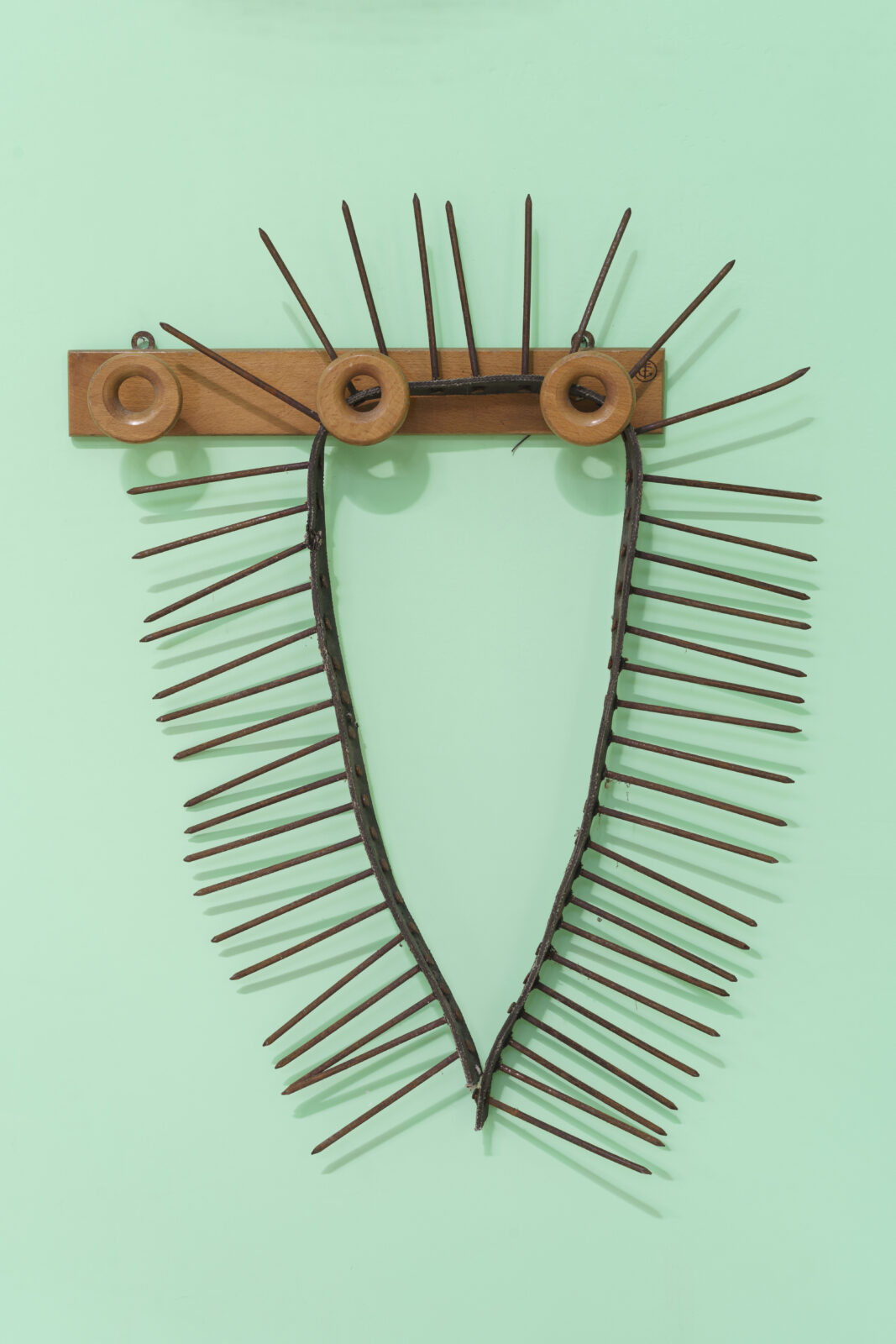
INTERIOR
“Furnishing the German Pavilion”, “making it look a bit nice” with wall paint, curtains and furniture, amidst its heavy, fraught history. After all the historical attempts by West German artists to destroy the German Pavilion – be it by smashing up the floor slabs or trying to get rid of the whole thing – the worst form of destruction seems to be making it cosy. Instead of constantly digging up all the dirt, shaking our heads in disbelief and feeling rattled, we should say: this is the normality we grew up with, and the reality that has shaped this country and will continue to shape it. We make ourselves comfortable in the German Pavilion, and feel in every juncture that there is no such thing as ‘comfortable’ here.
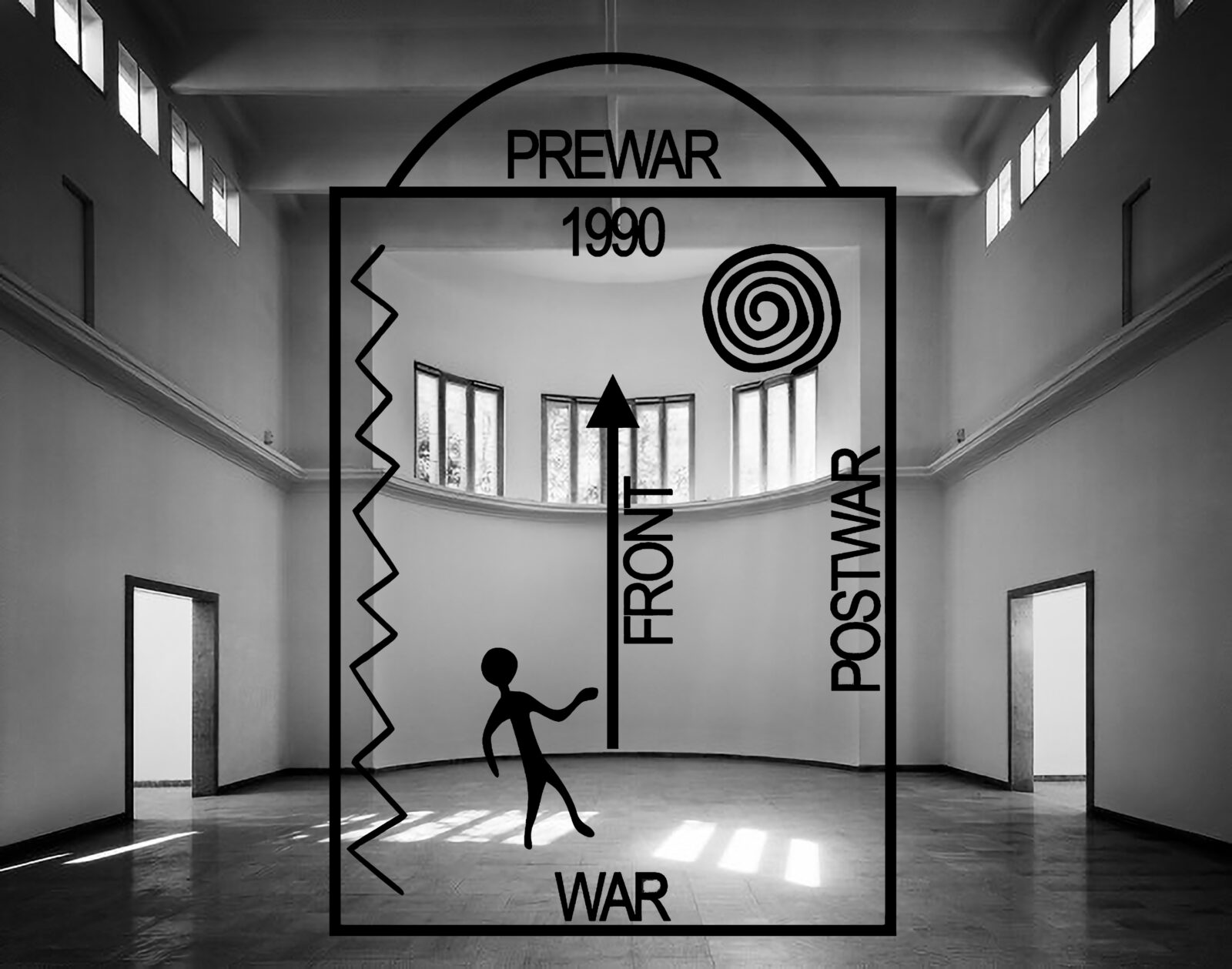
FRONT
The space can be read like a text whose beginning we think we know and whose end we fear to read. Between the beginning and the end, we, in the present, are uncertain about ability to influence the course of events. Yet we are the front line. Just as we can be sent to the front at any moment, the front is also dependent on us. What we want to fight for, or against. Whether we fight. Or radically love, let go, be vulnerable. Give up all hardness. Or fight out of love, twice as hard, hardcore.
DIE INNERE FRONT – THE HOME FRONT
In Henrike Naumann’s work The Home Front – Die Innere Front, the past, the present and the future intertwine through the lens of the East. The post-war period, everyday life in the workers’ and farmers’ state, and the baseball bat years of the 1990s merge into the archaeological prehistory of the present – leading to a moment in the pre-war period. Naumann destroyed the main room of the German Pavilion using interior design methods in her own unique way – trying to make it ‘cosy’. Curtains, furniture and furnishings become hieroglyphic symbols in her visual language, waiting to be deciphered. The mint green of the walls evokes memories of the 1990s—for those who grew up in the former East, of Soviet barracks.
East Germany is marked as part of the Eastern Bloc, and the GDR pavilion symbolically takes over the pavilion of the Federal Republic of Germany. Henrike Naumann situates her work consciously within an alternative art-historical reference system, for which one should have heard the names Gabriele Stötzer and Hans Ticha, but would not have come far by only relating to Hans Haacke or Joseph Beuys. East German art history merges with West German furniture history. Socialist realism collides with formalism and abstraction, and leaves behind a gigantic work of art. And we seek shelter between shot-up curtains and injured wall, but can only progress by fleeing forward, where the front awaits us.st in the pavilion of the Federal Republic of Germany. It took until the 1980s for art from the GDR to be shown in Venice. Henrike Naumann situates her work consciously within an alternative art-historical reference system, for which one should have heard the names Gabriele Stötzer and Hans Ticha, but would not have come far by only relating to Hans Haacke or Joseph Beuys.
The title The Home Front refers both to the national home front and to the furnishing of one’s own home. Naumann destroys the interior of the German Pavilion using interior design methods in her own unique way – by making it ‘cosy’. Curtains, furniture and furnishings become hieroglyphic symbols in her visual language, waiting to be deciphered. The mint green of the walls refers to the colour of former Soviet barracks.
In the GDR, the military and ideological front line lay between the Warsaw Pact and NATO, yet at the same time the GDR wanted to be part of the West. East German art history merges with West German furniture history. The collision of Socialist realism collides with formalism and abstraction, and leaves behind a gigantic work of art.
And we seek shelter between shot-up curtains and injured wall, but can only progress by fleeing forward, where the front awaits us.
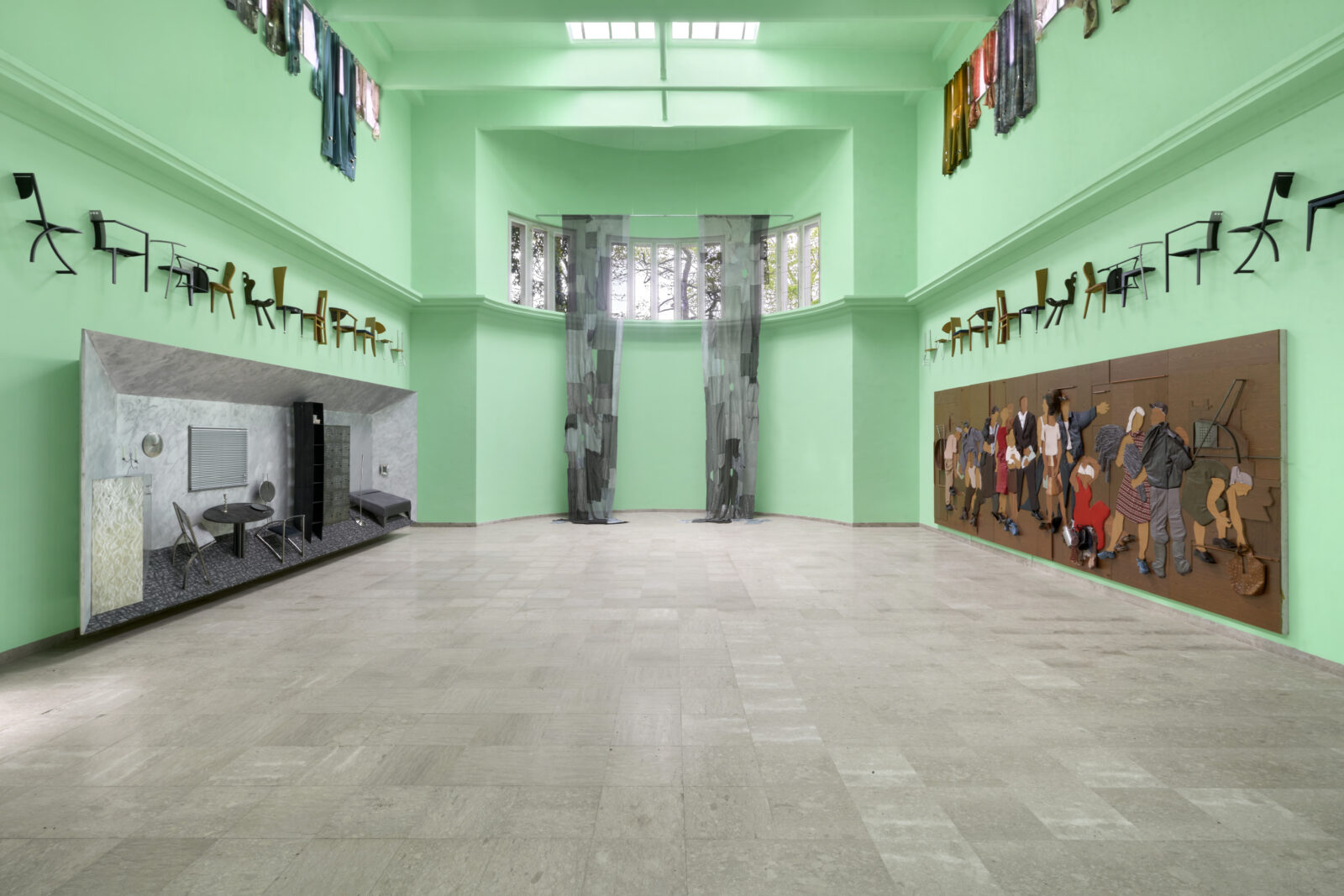
BARRACKS IN PASTEL
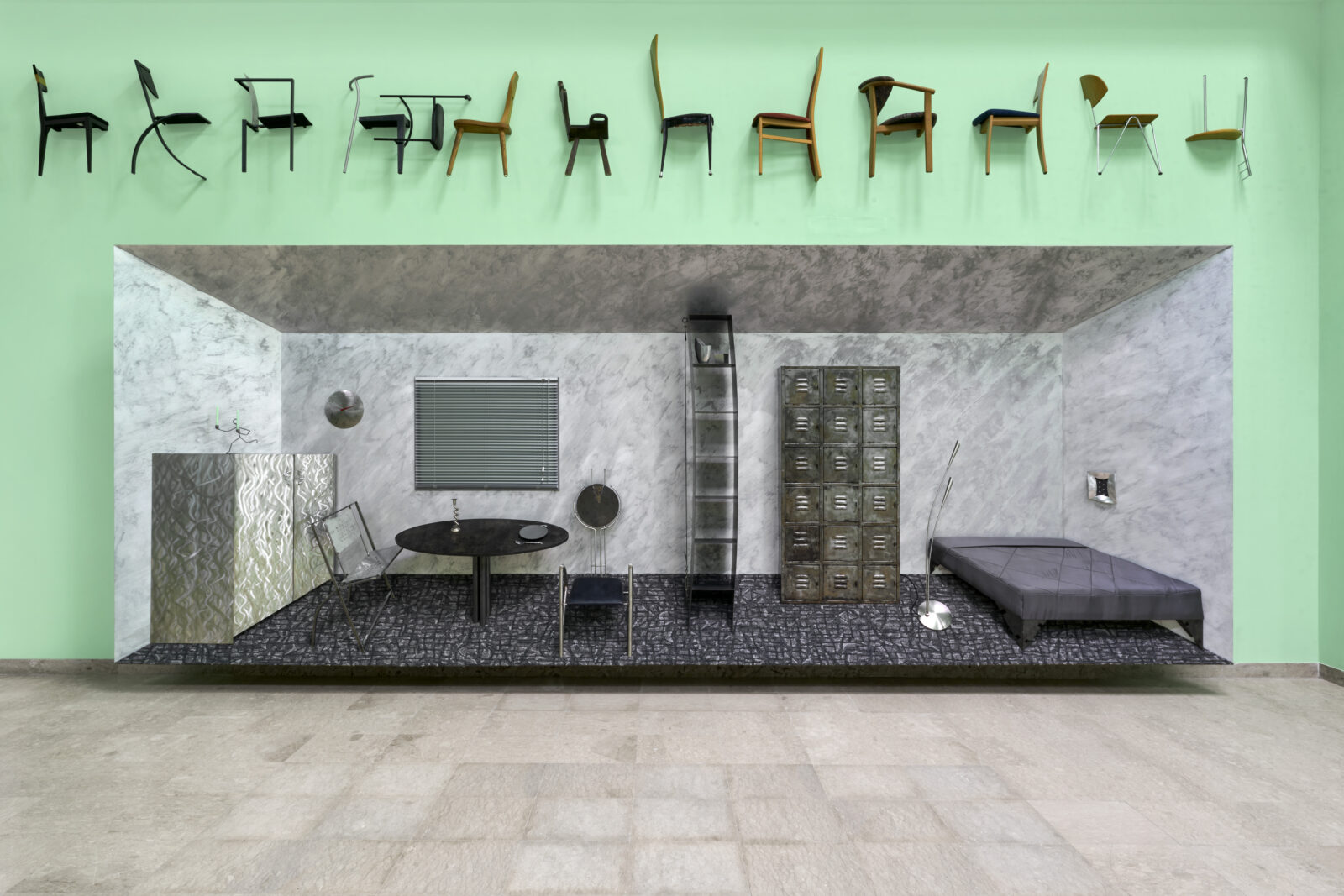
The colour of the room’s walls and ceiling echoes the shade used to paint Soviet barracks in East Germany. To this day, it can be found not only in the derelict halls between Schwerin and Zwickau, but also throughout the post-Soviet space, serving as a visual reminder of the former sphere of military and cultural influence. And whilst the mint-green colour may evoke associations with 1990s interiors for some, for others it may be linked to growing up in the former Eastern Bloc. A military green that isn’t really one. And for the truly brave, the colour of hope.
GDR colours that no longer exist. An alternative aesthetic reference system.
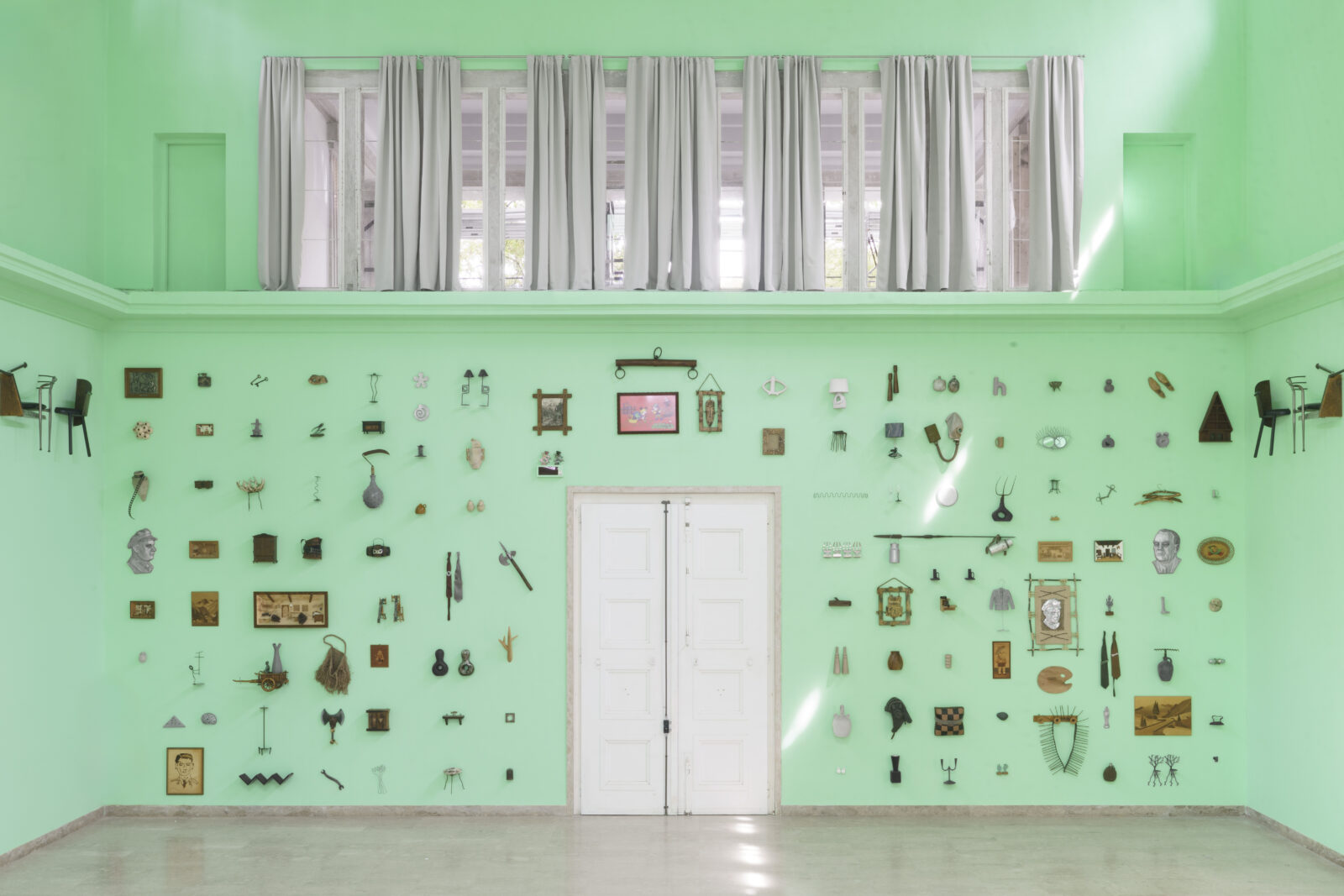
WAR
The war-torn legacy of the 20th century as the rubble in which we make our homes. Everyday objects become symbols laden with meaning, which we try to decipher as if they were a wall of hieroglyphs.
The catastrophe has always already happened
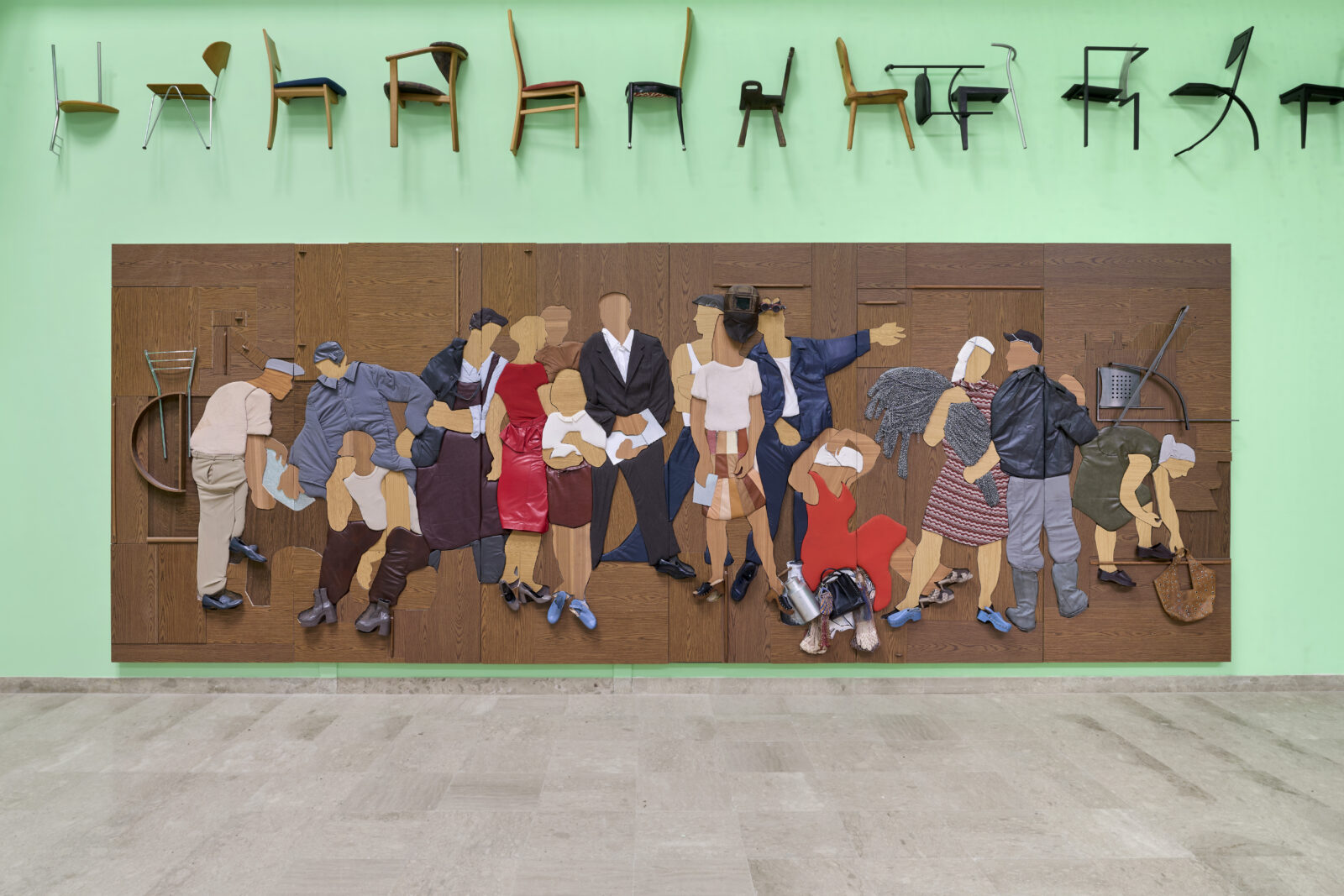
POST-WAR I – EAST GERMAN ART HISTORY
GDR Pavilion, 1958 split pavilion, alternative art-historical frame of reference, Hans Ticha, Wolfgang Mattheuer, Uwe Pfeier, Kurt Dornis, Wismut, mine, Erzgebirge, miniature living room dioramas (Bauernstuben), workers’ and peasants’ state
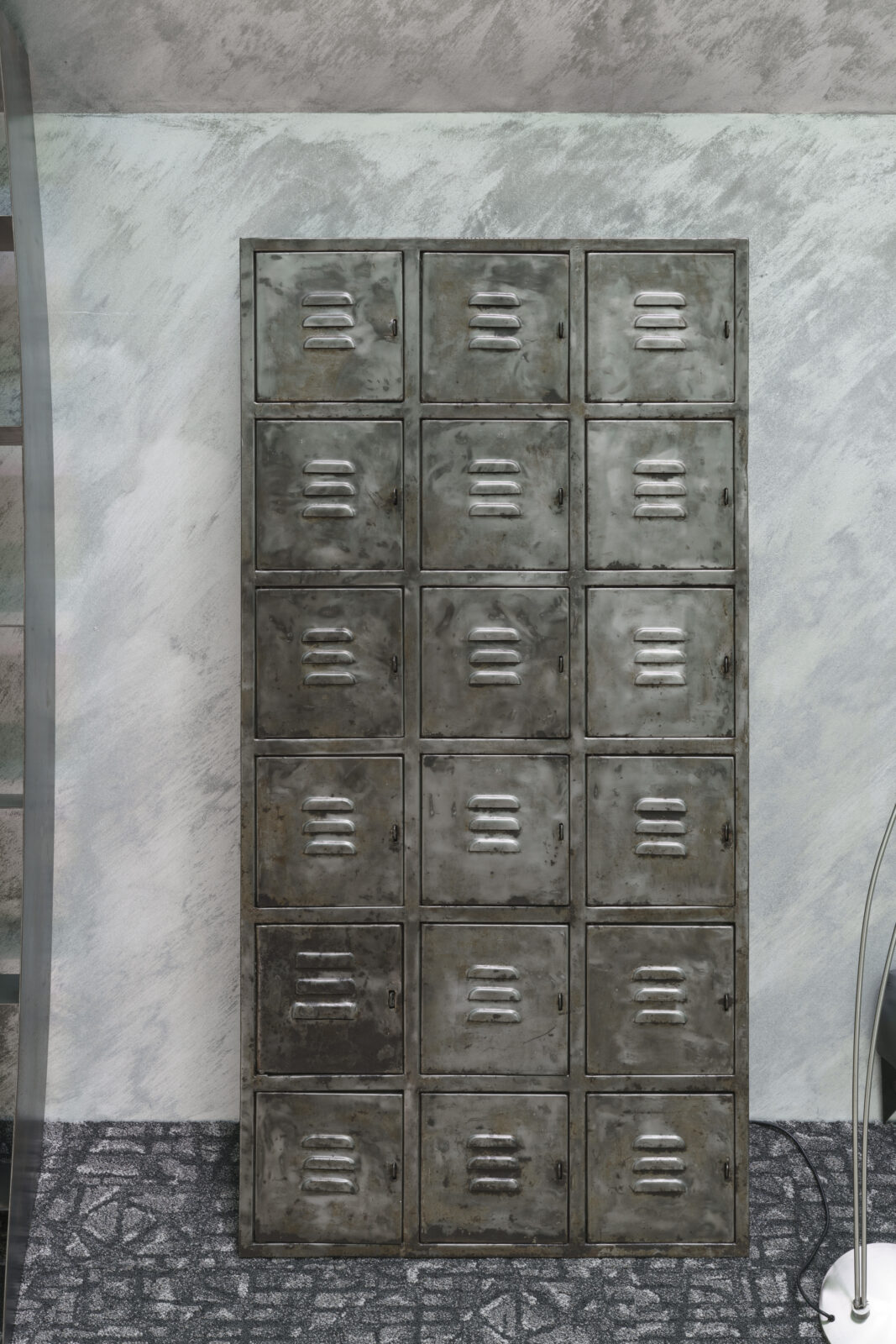
POST-WAR II – THE HISTORY OF FURNITURE IN WESTERN GERMANY
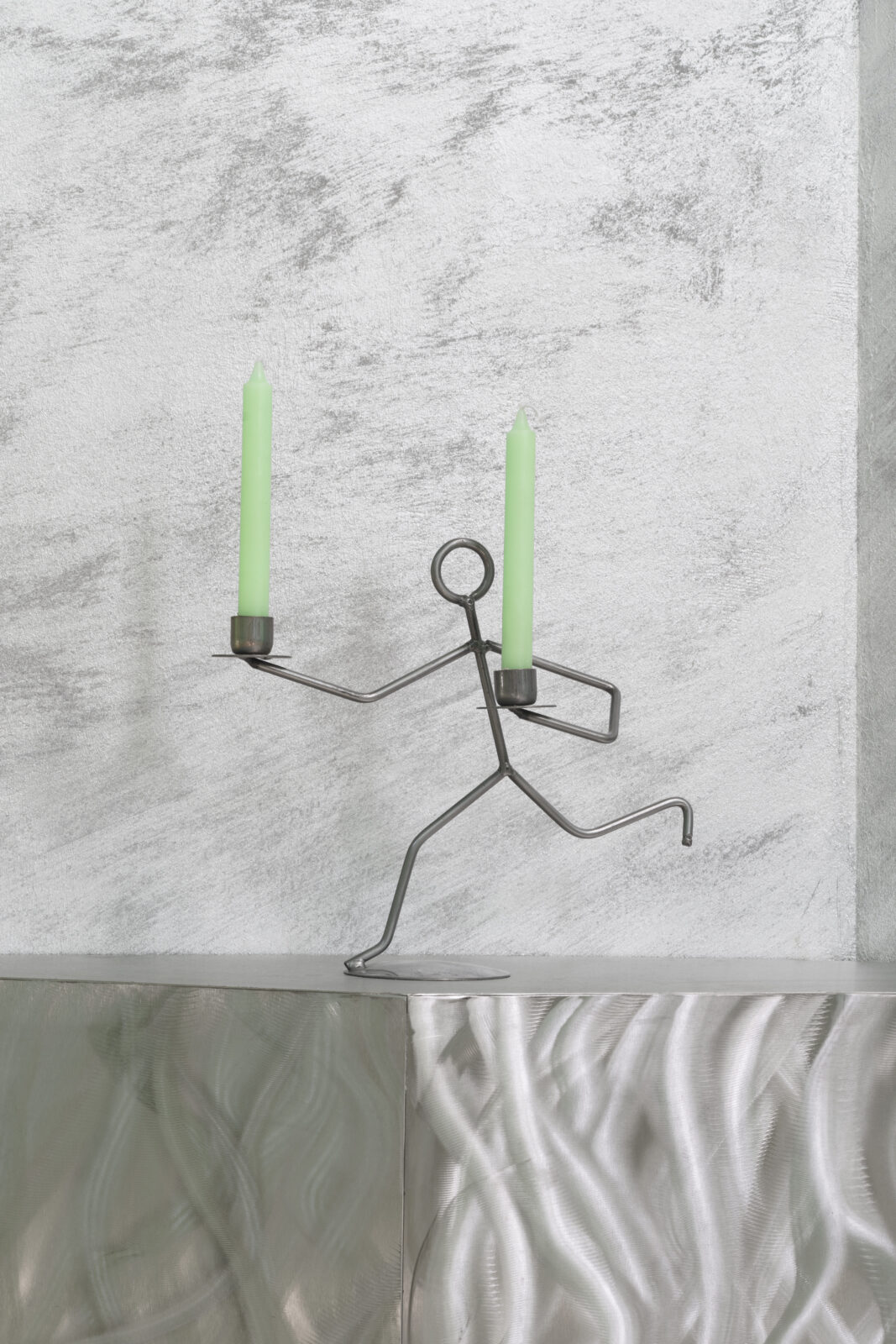
1942 / 1948, Willi Baumeister, kidney-shaped table (Nierentische), Penck, Craft and industrial production, Neo-Primitivism, New German Design, Christian Borngräber
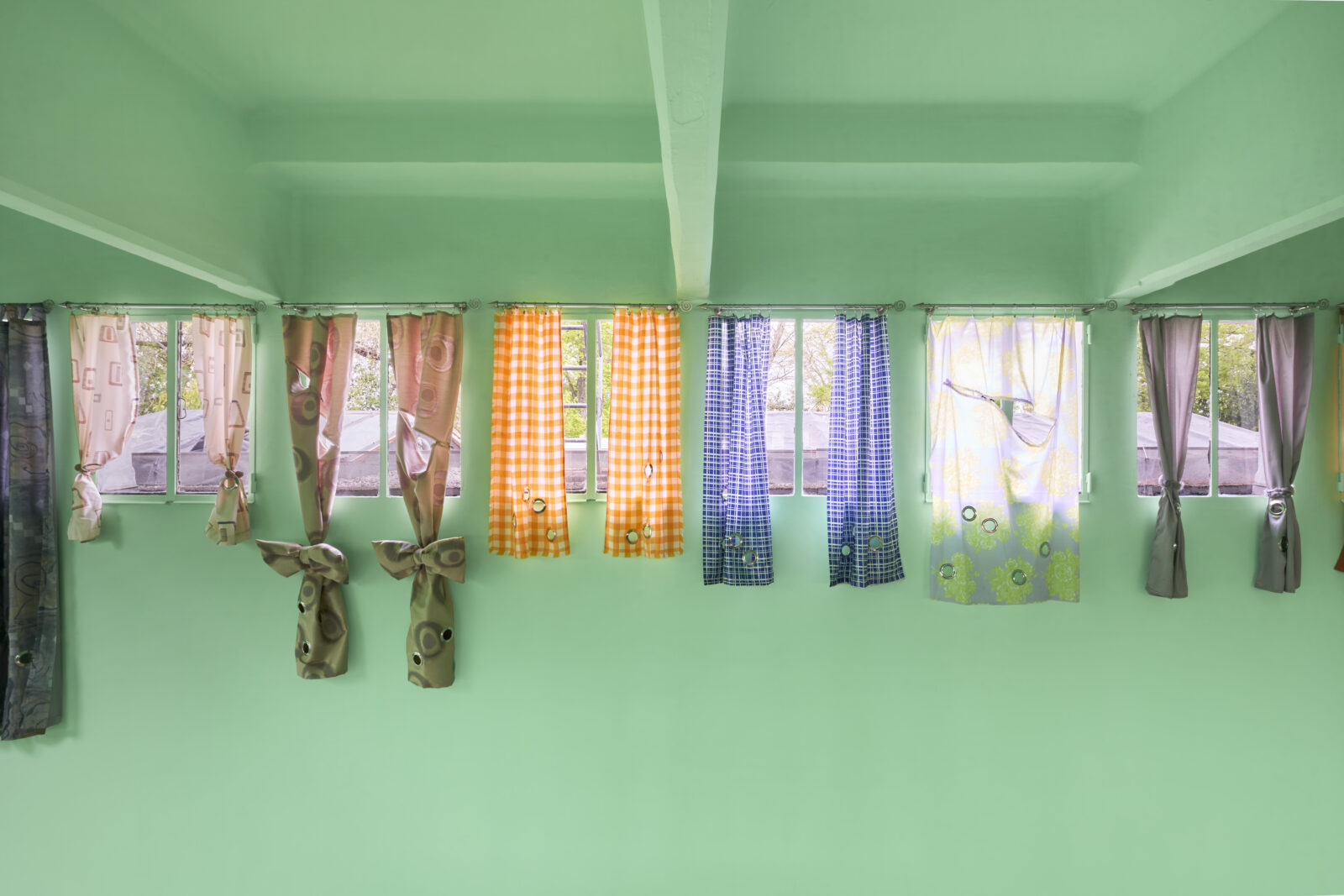
WINDOW FASHION
Uniform curtains on the hieroglyphic wall, shut-up curtains, and curtains bearing the scars of zips on the post-war walls, chainmail/hauberk curtains at the front
1990
We are haunted by the 1990s
The significance of this historic turning point for the past, present and future
TRÜMMERFRAU
Performance, Chic, Charming and Durable, Vertical Dance
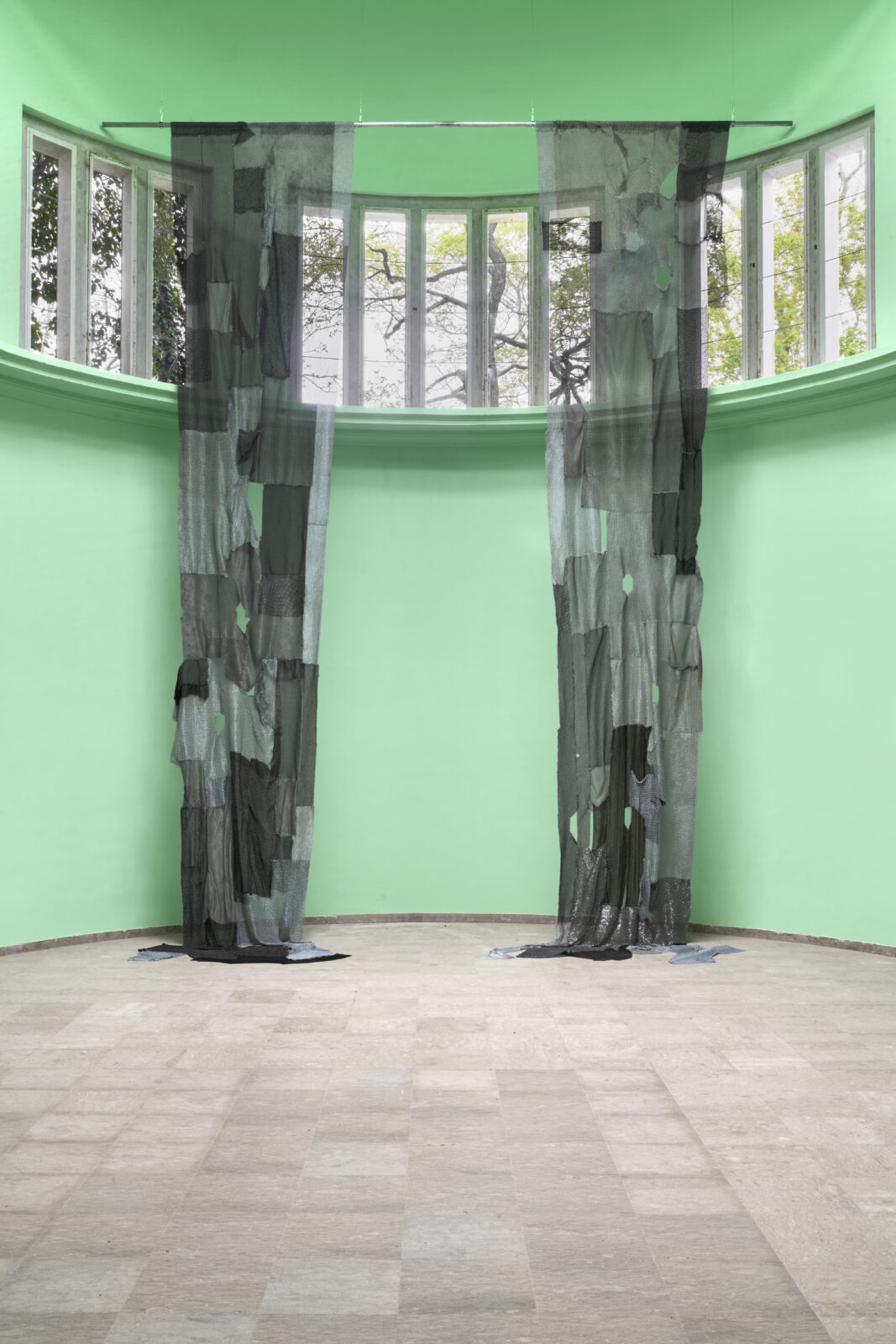
PRE-WAR
The situation we find ourselves in right now
Die Performance TRÜMMERFRAU wird gefördert durch die Stiftung Kunstfonds und den Beauftragten der Bundesregierung für Kultur und Medien.

Photos: Max Eulitz
Go to home